
Wetgeving machineveiligheid

When designing, supplying and using lifting equipment, extensive safety and quality requirements apply. These requirements originate from European directives that have been transposed into national legislation in the Netherlands. On this page, you can read which directives and provisions apply, who they are intended for and what this means for manufacturers, users and inspectors.
1. European Directives
1.1 Machinery Directive (2006/42/EC)
This Directive has been applicable since 1 January 1995. Machinery and lifting accessories first placed on the market from that date onwards must comply with this Directive.
The Directive sets minimum safety requirements for machinery, lifting equipment and components that are sold or used within the European Economic Area. The Machinery Directive therefore primarily addresses manufacturers and importers. It provides them with strength and design requirements intended to ensure safe use as far as possible.
Purpose of the Machinery Directive
- Preventing hazardous situations through design requirements
- Ensuring safe design and manufacture
- Ensuring that machinery can be safely put into service
This Directive covers the following products:
- Machinery
- Interchangeable equipment
- Safety components
- Lifting accessories
- Chains, ropes and webbing designed for lifting purposes
- Removable mechanical transmission devices
- Partly completed machinery

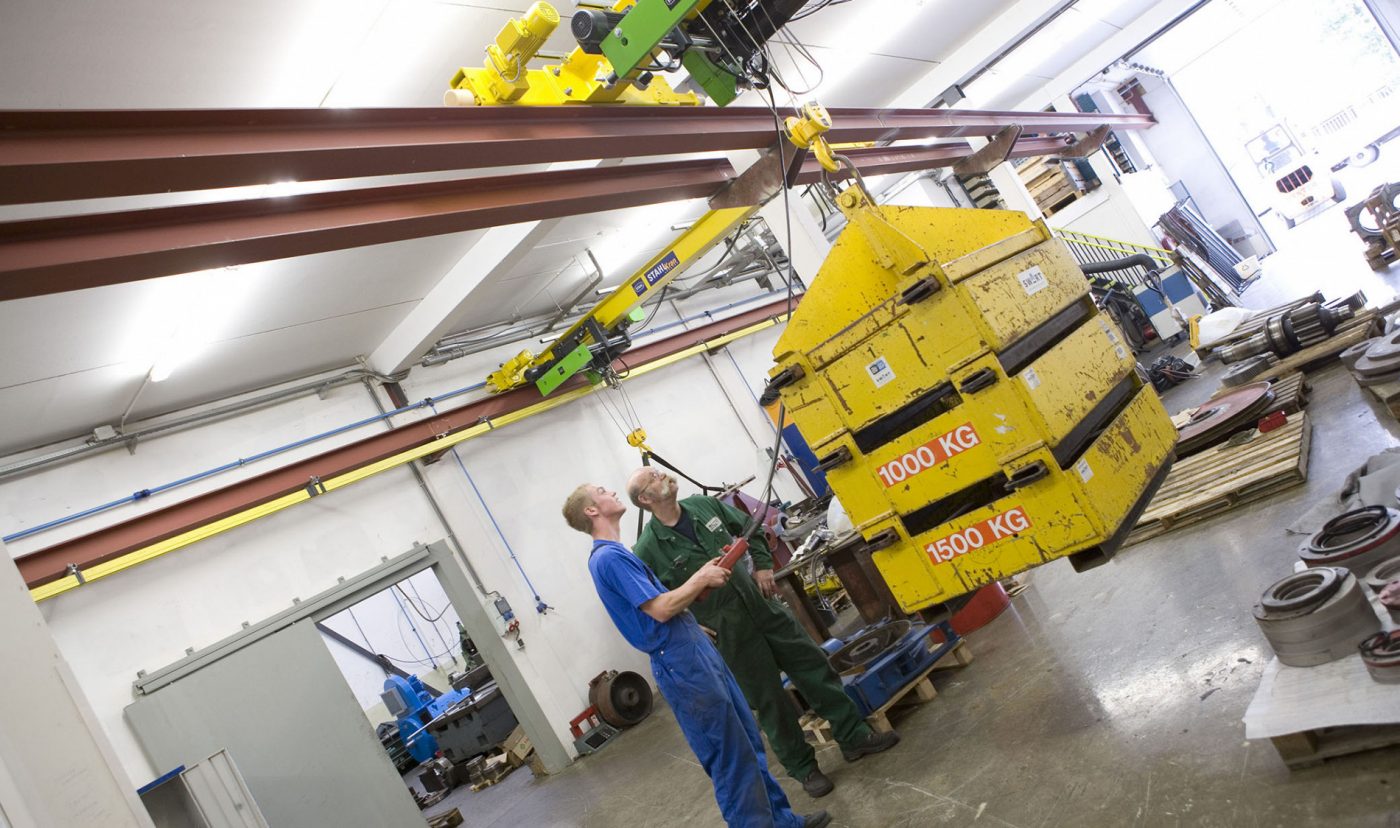

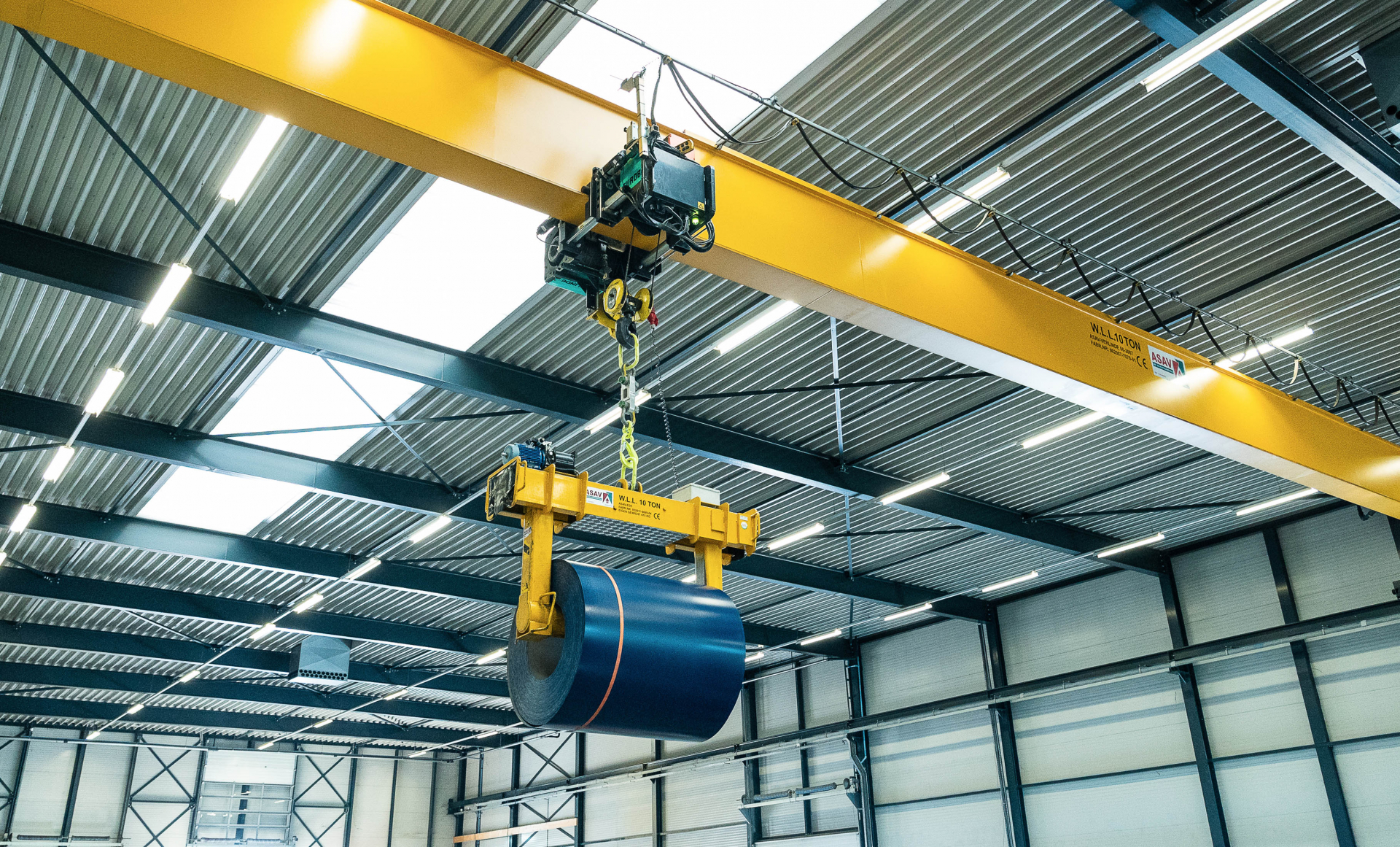

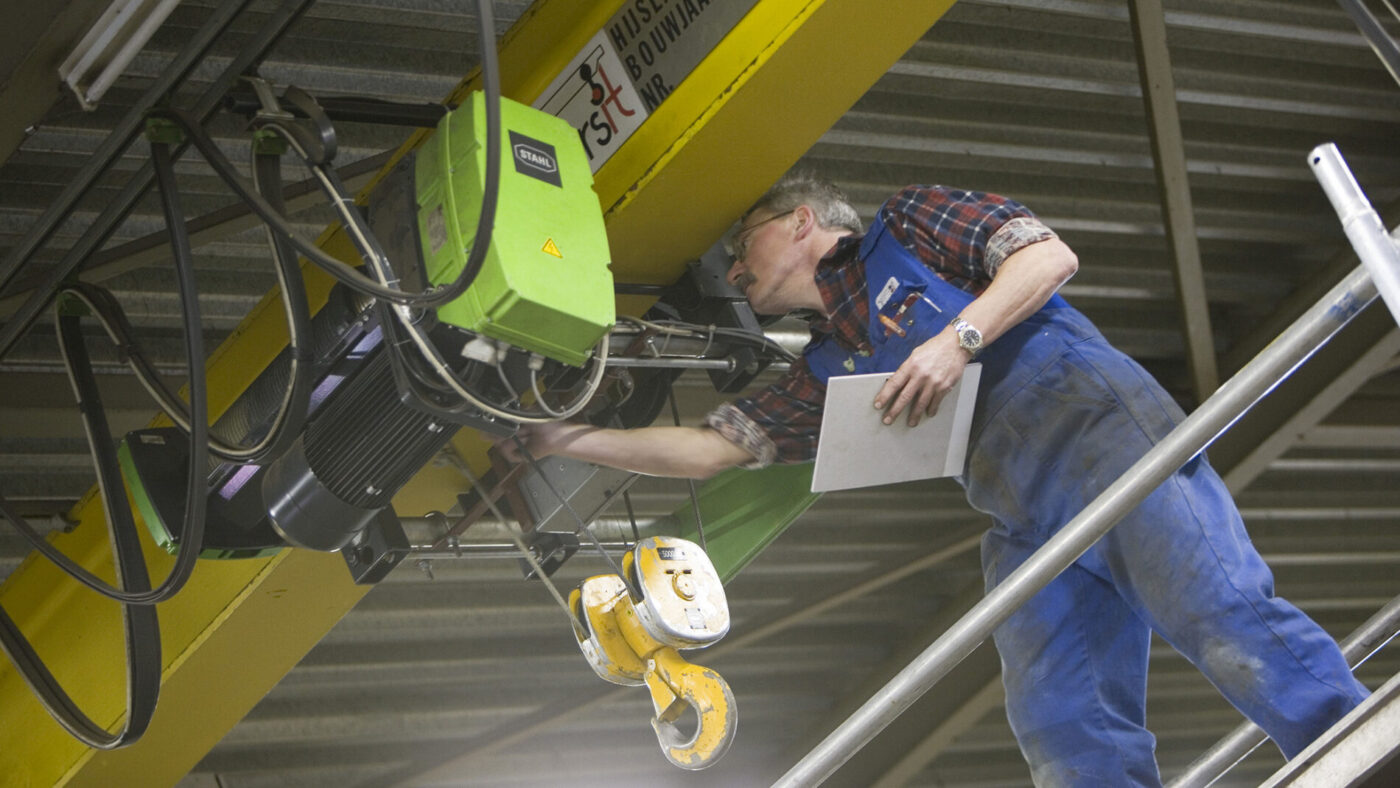
The Machinery Directive (2006/42/EC) uses the following definitions for machinery:
- Machinery: an assembly, fitted with or intended to be fitted with a drive system other than directly applied human or animal effort, consisting of linked parts or components, at least one of which moves, and which are joined together for a specific application;
- Interchangeable equipment: a device which, after the putting into service of machinery or of a tractor, is assembled with that machinery or tractor by the operator himself in order to change its function or attribute a new function, provided that this equipment is not a tool;
- Safety component: a component which serves to fulfil a safety function, which is independently placed on the market, the failure and/or malfunction of which endangers the safety of persons, and which is not necessary in order for the machinery to function, or for which normal components may be substituted in order for the machinery to function.
- Partly completed machinery: a product that can only form a complete machine when combined with other parts. It is therefore not a finished product in itself.
1.2 CE-markering bij voldoen aan de richtlijnen
When machinery complies with the essential requirements of the Machinery Directive, it may be provided with the appropriate markings and declarations. This allows products to be freely traded within the European Economic Area (EEA).
Responsibility for compliance and administrative obligations lies with the manufacturer or importer. Among other things, they must ensure:
- a technical file (to be retained for at least 10 years)
- correct instructions for use
- complete and accurate documentation
Once these requirements have been met, the product may be affixed with CE marking and accompanied by a manufacturer’s declaration (EC Declaration of Conformity, Annex II, Part 1, Section A or B). This allows the machinery to be sold and used within the EEA without further barriers. The markings and manufacturer’s declarations are explained further below.
1.3 CE IIA – declaration for completed machinery
Completed machinery falling within the scope of the Machinery Directive must be supplied with an EC Declaration of Conformity.
The content of this declaration is laid down in Annex II, Part 1, Section A of the Machinery Directive.
In practice, this declaration is also referred to as the IIA Declaration.
1.4 CE IIB – declaration for partly completed machinery
Partly completed machinery generally does not, or only partially, comply with all the requirements of the Machinery Directive.
When such machinery is incorporated into or assembled together with other partly completed machinery, it may nevertheless be placed on the market, provided that it is accompanied by a Declaration of Incorporation for Partly Completed Machinery.
The content of this declaration can be found in Annex II, Part 1, Section B of the Machinery Directive and is therefore commonly referred to as the IIB Declaration.
1.5 CE marking and modifications to machinery
An owner may decide to modify or alter machinery.
When the impact of such a modification means that the machinery no longer complies with the essential requirements of the Machinery Directive, the machinery may not be used.
In order to lawfully put the machinery back into service, the owner must ensure that it once again complies with the applicable requirements. This includes, among other things:
- carrying out a Risk Inventory and Evaluation (RI&E) relating to the modification
- updating the Technical Construction File
- amending the instructions for use, where applicable.
Only once these steps have been completed and the machinery once again complies with the essential requirements may it be put back into use.
The Machinery Directive explains the requirements that safe machinery must meet when it is placed on the market. In practice, this is linked to the rules governing the safe use of work equipment under the Work Equipment Directive and the Working Conditions Act. You can read more about this on the Work Equipment Legislation page.
Questions about work equipment legislation
Would you like to make sure that you are fully compliant? EKH and one of our affiliated members will be happy to assist you further.