
Examination of Lifting Appliances

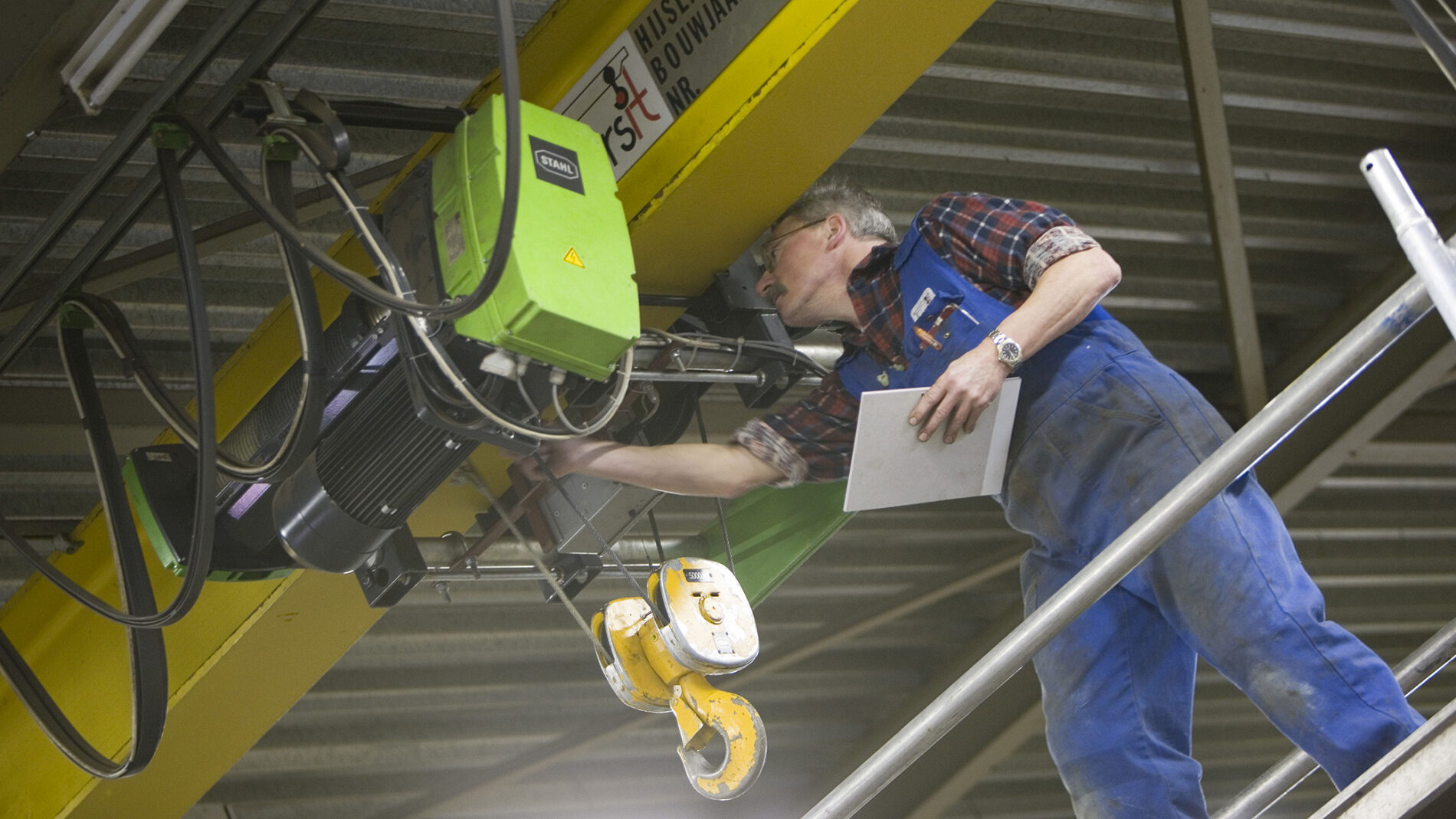
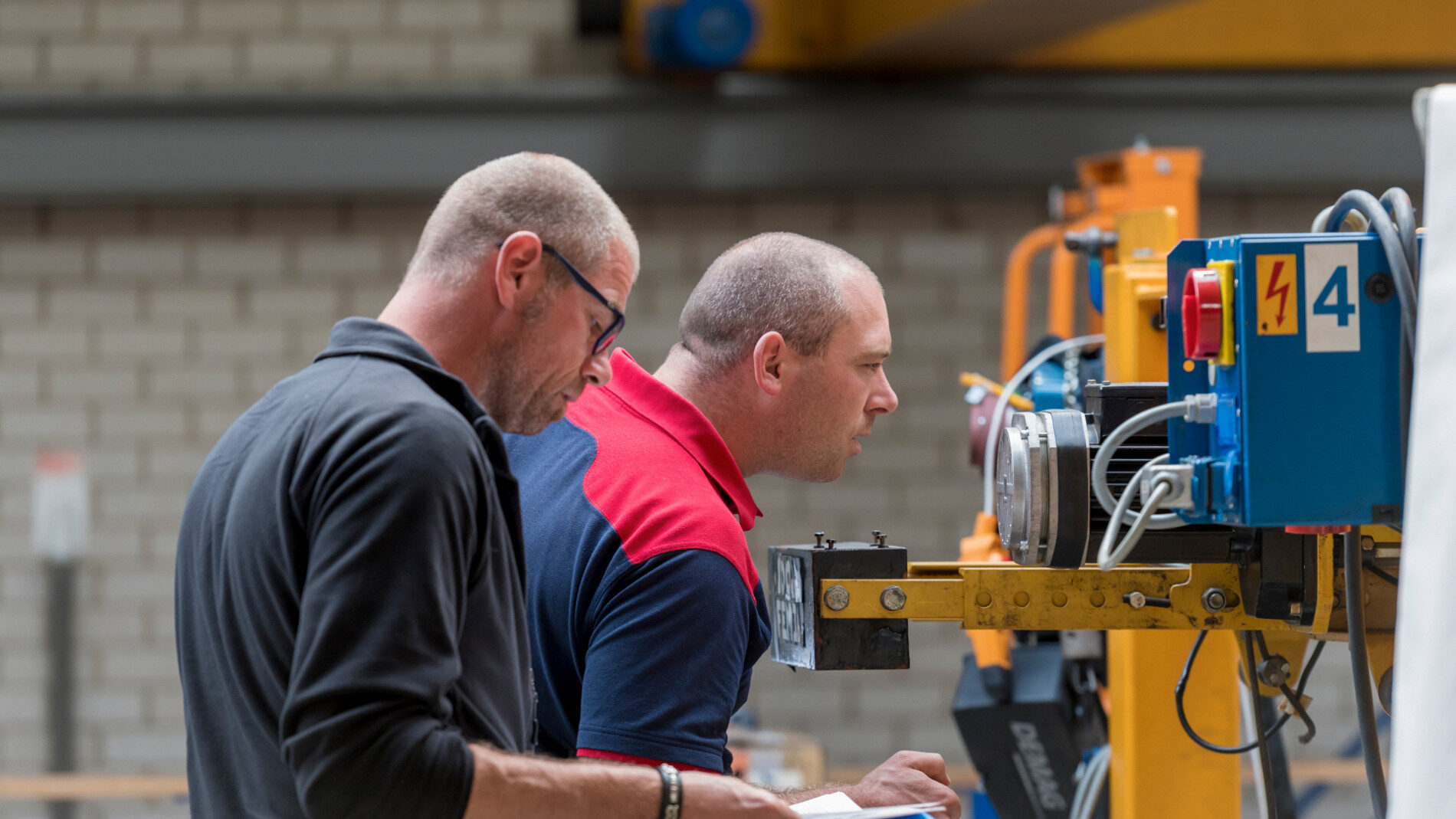
Lifting appliances are work equipment used for lifting loads, such as cranes, hoists, winches and fixed lifting installations. The examination of lifting appliances is intended to determine whether the appliance is still safe and complies with the applicable requirements. In practice, the examination and assessment requirements are set out in the working instructions of the EKH Industry Association, and examinations are carried out by demonstrably competent inspectors.
On this page, you can read how the examination of lifting appliances is organised, what the role of EKH is and which additional requirements apply to cranes.
What does EKH mean by lifting appliances?
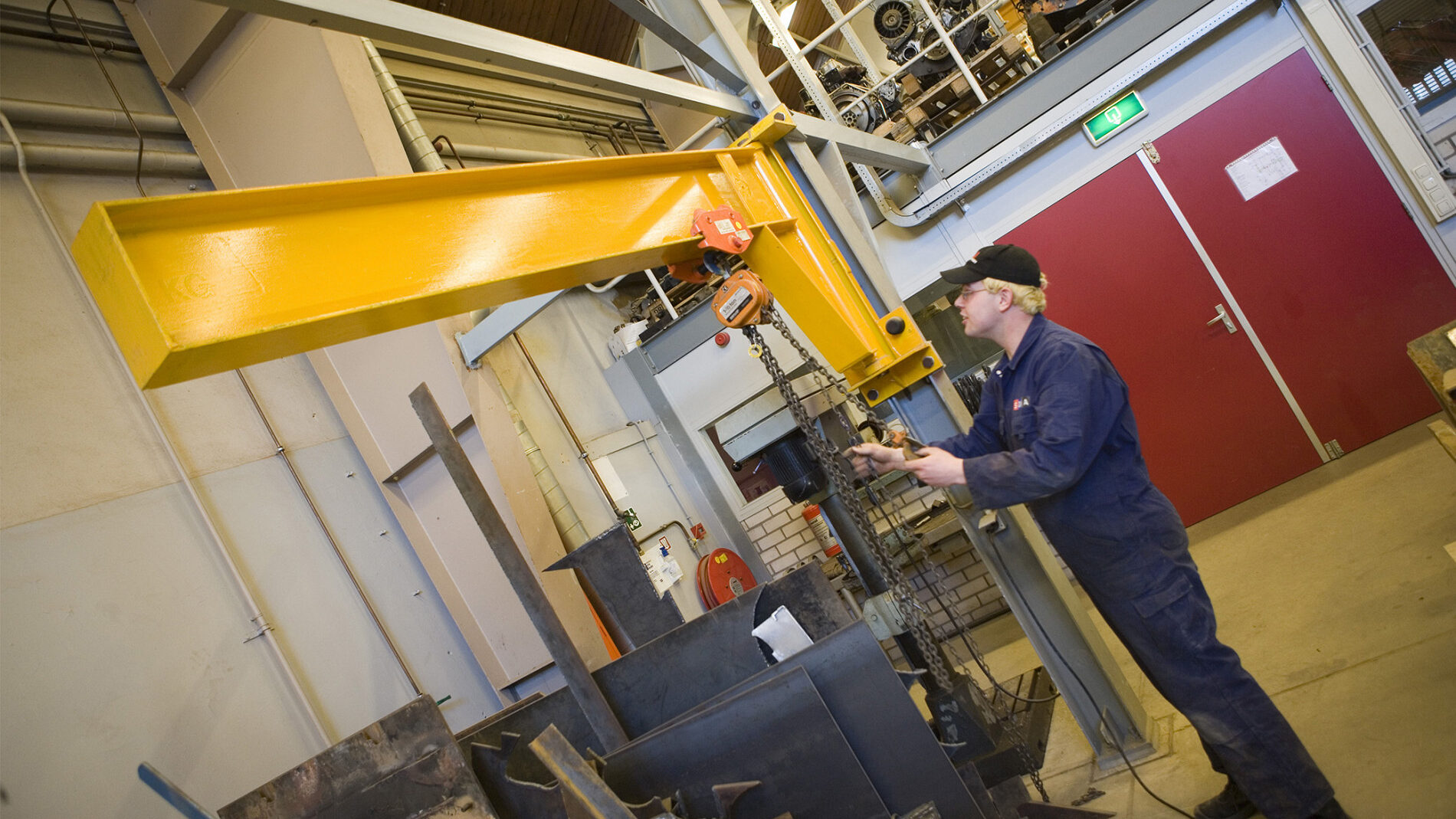
Lifting appliances are used in industries including manufacturing, construction and logistics and form an important part of daily operations. Lifting appliances include equipment such as cranes, hoists, winches and fixed lifting installations. Because lifting appliances are used to move loads and may lift loads above people and installations, their use always involves safety risks.
Inspection and examination of lifting appliances
For lifting appliances, a distinction is made between inspection and examination. During an inspection, it is assessed whether the lifting appliance can still be used safely at that particular time. During an examination, it is determined whether the lifting appliance complies with the applicable legal requirements, standards and regulations, and the results are recorded in an examination report.
Examinations must be carried out by a competent person. The inspection and examination requirements are based on manufacturers’ instructions, applicable standards and legal provisions. These requirements determine which components must be checked and how these checks must be carried out.



EKH’s role
EKH translates legislation and standards into practical working instructions for lifting appliances and publishes these, among other things, in the Lifting Appliances Handbook. These requirements determine which components must be checked and how this must be carried out. In addition, EKH provides training and certification for inspectors and sets quality requirements for affiliated inspection companies, ensuring that examinations of lifting appliances are carried out with demonstrable competence and reliability.
Important references:
- Lifting Appliances Handbook: https://www.ekh.nl/download/
- Inspector training: Above-the-Hook Inspector Training
Overview of examination intervals for lifting appliances:
Examination intervals for Above-the-Hook lifting appliances
| | Annual inspection | Annual mechanical examination | Annual full mechanical examination and testing | Certification (CE) and testing for new equipment / after repair |
|---|---|---|---|---|
| Hoists | ||||
| Hand chain hoists | ||||
| Electric hoists | ||||
| Manual trolleys | ||||
| Electric trolleys | ||||
| Crane components | ||||
| Bottom blocks | ||||
| Lifting hooks (Seperate) | (1x 4 years) | |||
| Crane-mounted grabs | ||||
| Crane-mounted clamps | ||||
| Lifting magnets | ||||
| Vacuum lifting equipment | ||||
| Supporting equipment | ||||
| Crane runways / monorails | ||||
Cranes as a special category
There is often confusion about why the examination of cranes is no longer regulated under the Working Conditions Act, but under the Commodities Act. The direct reason for this was the repeal of the Dangerous Machinery Act and the incorporation of all product safety requirements into the Commodities Act. This resulted, at the beginning of 2003, in an amendment to the Working Conditions Act and the addition of specific provisions to the Commodities Act concerning the examination regime for cranes.
The fact that the examination of cranes falls under the Commodities Act is related to the fact that, in particular, mobile cranes and tower cranes are classified as dangerous machinery.
This differs from the arrangements that apply to many other types of machinery. These cranes fall within a category designated by the Minister. Their examination may therefore only be carried out by designated notified bodies. The designation of these bodies is regulated under the Commodities Act.
Would you like to know more about the examination of cranes? Please consult the information via the button below.
Annual examination and testing of cranes
Article 6d of the Commodities Act Decree on Machinery does not separately refer to the testing of cranes. This is because the obligation to carry out testing is laid down in several parts of the legislation, namely:
- Testing upon delivery of new equipment is regulated in Article 5 of the Commodities Act Decree on Machinery. Cranes are regarded as machinery for this purpose. This is consistent with the requirements of the Machinery Directive (Section 4.1.2.3), which stipulate that the manufacturer must test the crane as a complete unit after manufacture.
- Testing following a major repair or modification is regulated in Article 7.4a, paragraph 2, of the Working Conditions Decree. This article applies to all work equipment and therefore also to cranes. An examination must also be carried out after each assembly at a new location or position.
- Appropriate testing during the periodic annual examination is regulated in Article 7.4a, paragraph 3, of the Working Conditions Decree. This article refers to examination and, where necessary*, testing. The legislator has therefore considered it sufficient not to mention the obligation to carry out testing separately for cranes in several places.
**The term “where necessary” can be confusing. For example, a lifting sling cannot be load-tested, whereas the correct functioning of a lifting brake or an overload protection device can only be established through testing.
Reference in the EKH working instructions
The practical implementation of the requirement to test cranes where necessary during periodic examinations is included in the EKH working instructions.
Among other things, these instructions specify that the overload protection device of a crane must be tested annually to verify its operation and correct setting. Please refer to Section 0304 of the EKH working instructions for more information.
Since 1 January 2006, a crane will not be approved if the annual testing of the overload protection device cannot be carried out. During this annual test, the proper functioning of other safety-critical components, such as brakes, is also assessed.
Questions about the examination of lifting appliances
Do you have questions about the examination of lifting appliances, working as an inspector or operating as an EKH-recognised inspection company? For technical questions, explanations of the working instructions and practical support, you can always contact the EKH Industry Association.