
General Commercial Liability

When carrying out lifting operations using lifting equipment, there are statutory obligations for both employers and employees. These obligations are supervised by the Netherlands Labour Authority. On this page, you can read about the responsibilities that apply, when enforcement action is taken and which measures are required to ensure that lifting operations can be carried out safely.
Official Report
The Netherlands Labour Inspectorate (formerly the Inspectorate SZW) may draw up an official report when a situation arises in which there is, or can reasonably be expected to be, a risk of death or serious damage to employees’ health. An official report is also drawn up in the event of occupational accidents. In such cases, the Netherlands Labour Inspectorate involves the Public Prosecution Service. The public prosecutor then determines whether criminal proceedings will be brought against the company.
Employee Responsibilities
In the first instance, the employer is responsible for working conditions. However, employees also have obligations. If an employee fails to comply with safety regulations, for example by removing a safety guard from a machine, the Netherlands Labour Authority is authorised to impose a fine for this.
Employer Responsibilities
The employer has primary responsibility for working conditions and must always ensure a safe workplace. This applies not only to permanent and temporary employees, but also to hired temporary workers and self-employed persons. If an employee, whether employed directly or hired, has an accident, the employer may be held liable.
The Netherlands Labour Authority may impose a fine if the employer fails to meet its obligations to protect employees. The circumstances in which a fine may be imposed are precisely defined in the Working Conditions Act. This includes, for example:
- failure to have a risk inventory and evaluation (RI&E), or an incomplete RI&E, including the absence of an action plan;
- failure to provide information and training, or providing insufficient information and training;
- failure to report an occupational accident;
- failure to carry out preventive tasks;
- failure to organise or facilitate a periodic occupational health examination.
The Working Conditions Decree also specifies situations in which the Netherlands Labour Authority may impose a fine, for example when no measures have been taken to prevent or limit harmful noise.

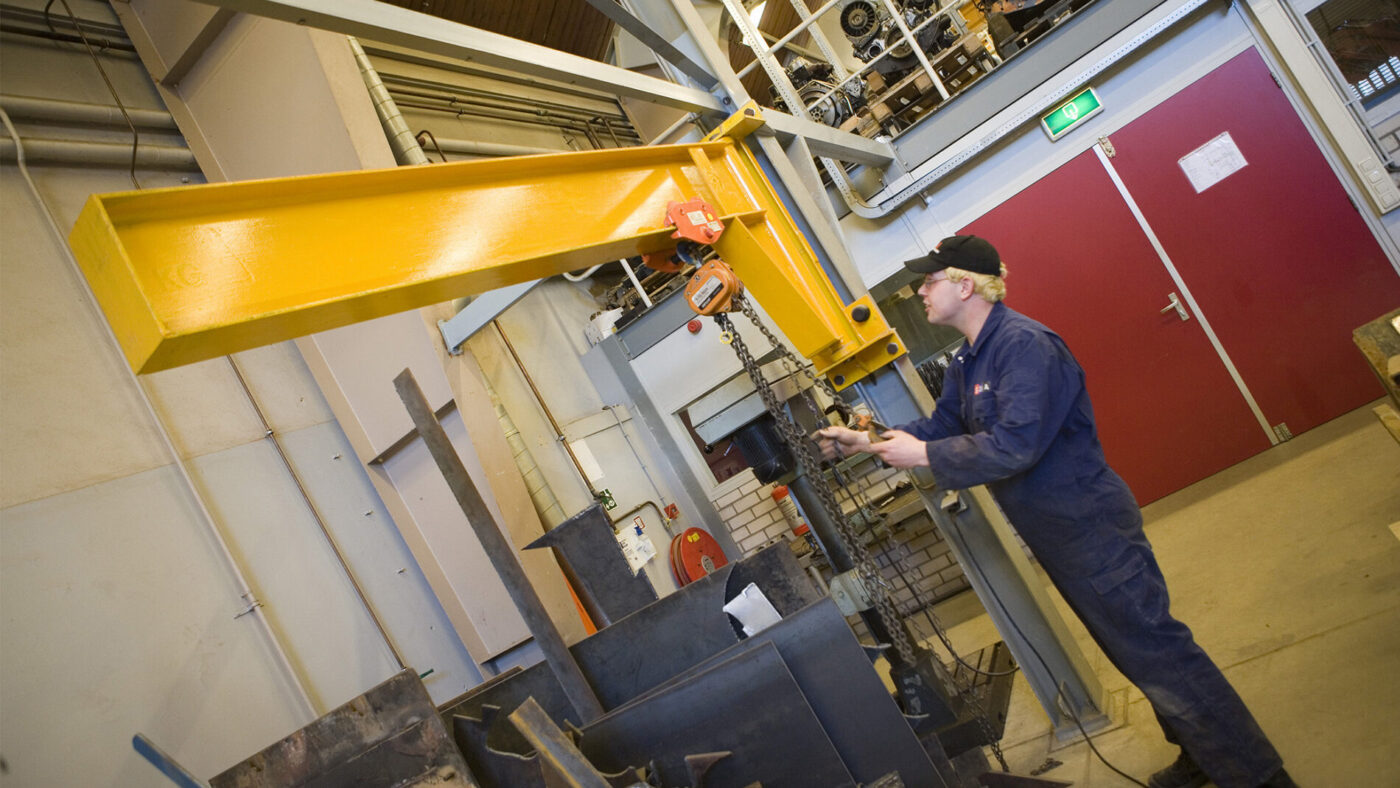

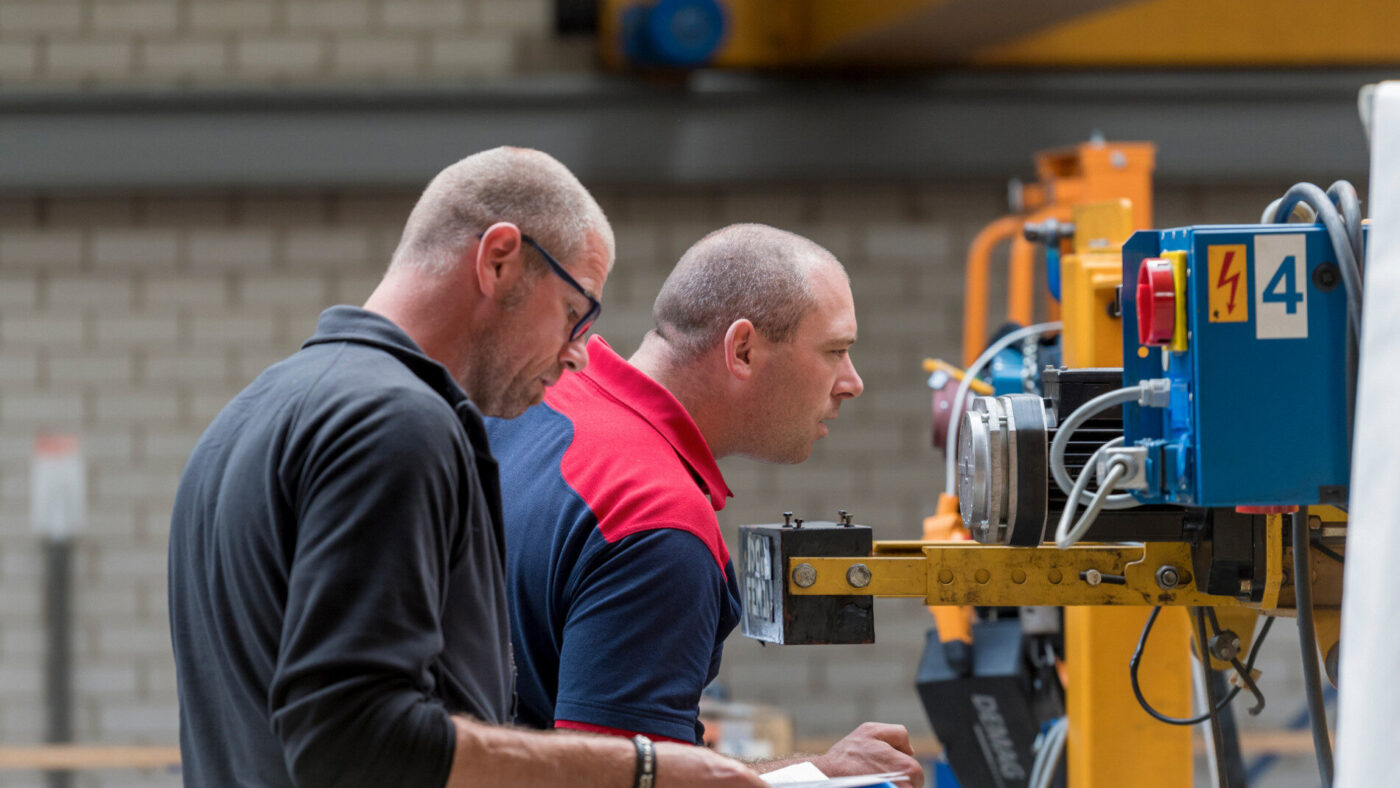

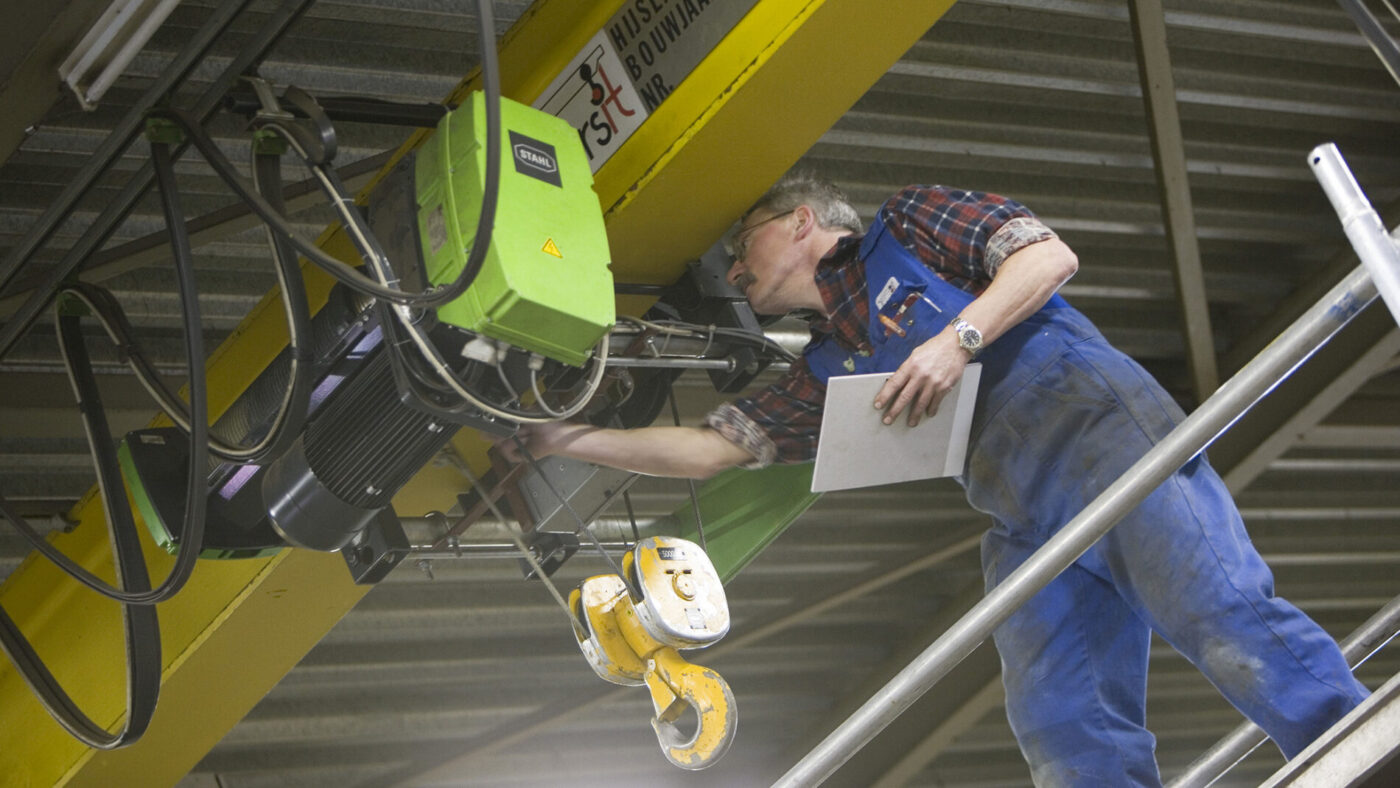
The employer must take measures
It is advisable for employers to implement the measures below to minimize the risk of accidents:
- make working conditions an integral part of the company’s policy and ensure that this subject is addressed regularly in work meetings;
- regularly provide employees and visitors with information about risks and the protective measures to be taken;
- consult experts when there is uncertainty about the Working Conditions Act and related legislation;
- when other companies or self-employed persons are engaged, consult with them in advance and, where necessary, set out agreements contractually, so that it is clear who is responsible for what;
- use the risk inventory and evaluation (RI&E) to identify the risks associated with work activities, including when third parties carry out the work. Discuss the protective measures to be taken with the employees concerned, and with both parties when a third party is engaged.
Service Life of Cranes and Hoists
Cranes and hoists have a finite service life and, in certain cases, must undergo periodic overhaul.
A calculation tool (SWP tool) can be used to determine whether the end of the safe operating period has been reached by calculating the remaining service life in accordance with FEM 9.755. The calculation tool is an Excel template. A separate calculation sheet is automatically created for each crane, which can be added to the crane logbook for the crane concerned.
Note: As of 13 February 2018, version V9 of this calculation tool is available. In this version, the load spectrum (kM) is calculated more accurately.
Questions about General Commercial Liability
Do you have questions about supervision, responsibilities or enforcement in lifting operations? Please feel free to contact EKH for clarification and support.
Would you like to know more about general commercial liability for defects in products, such as lifting equipment? Also see the Product Liability page for an explanation of the statutory framework and the conditions for submitting a claim.